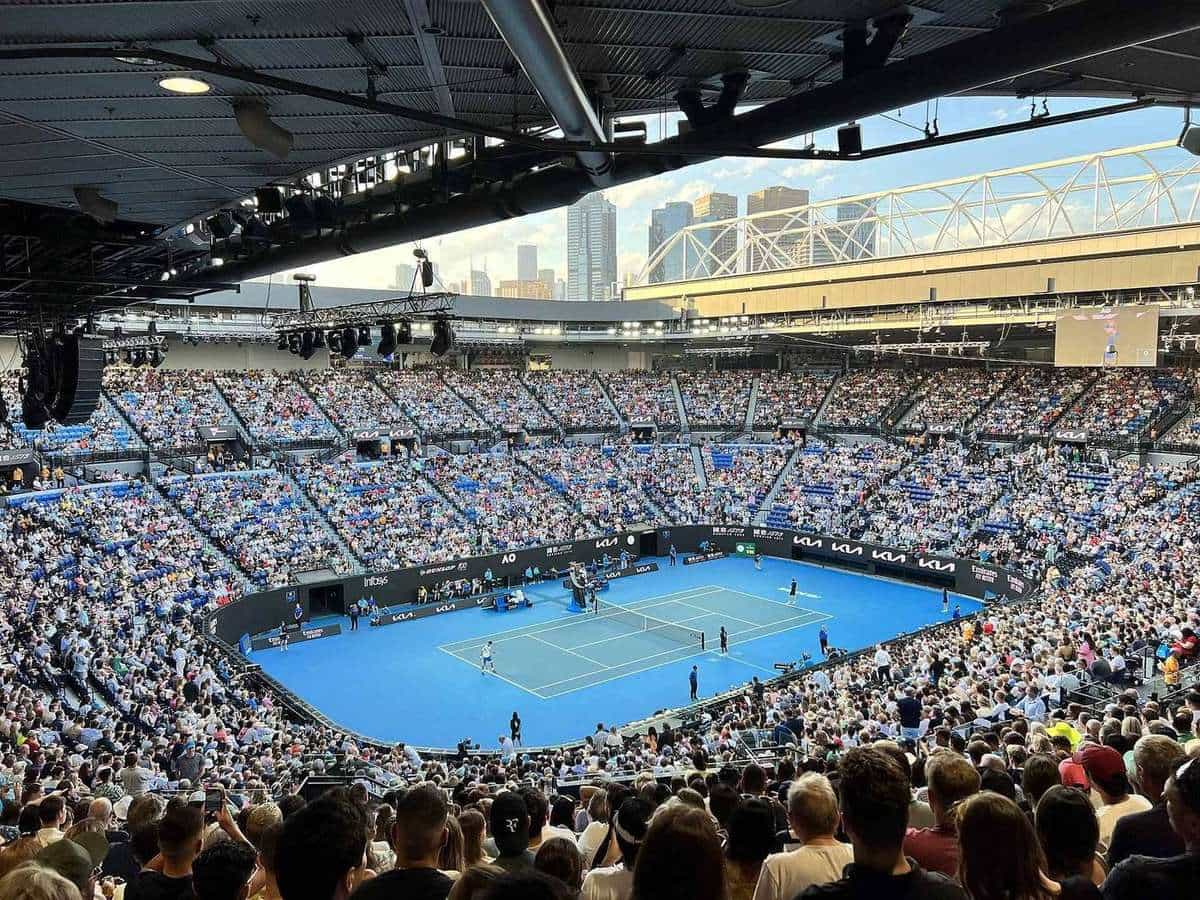
The Australian Open is the first Grand Slam of every tennis year and the best-attended of the four. Its history is a story of a wandering championship that finally found a home, of grass giving way to hard courts, and of a tournament that once struggled to attract the best players becoming one of the world's great sporting events.
1905
First held
Warehouseman's Cricket Ground
1972–87
Kooyong
Last years on grass
1988
Melbourne Park
Hard courts and roofs
Our guides
History of the Australian Open
From the first Australasian Championships in 1905, through travelling venues in five Australian cities and two in New Zealand, to the move to Melbourne Park in 1988. Read our Australian Open history.
Kooyong and Melbourne Park
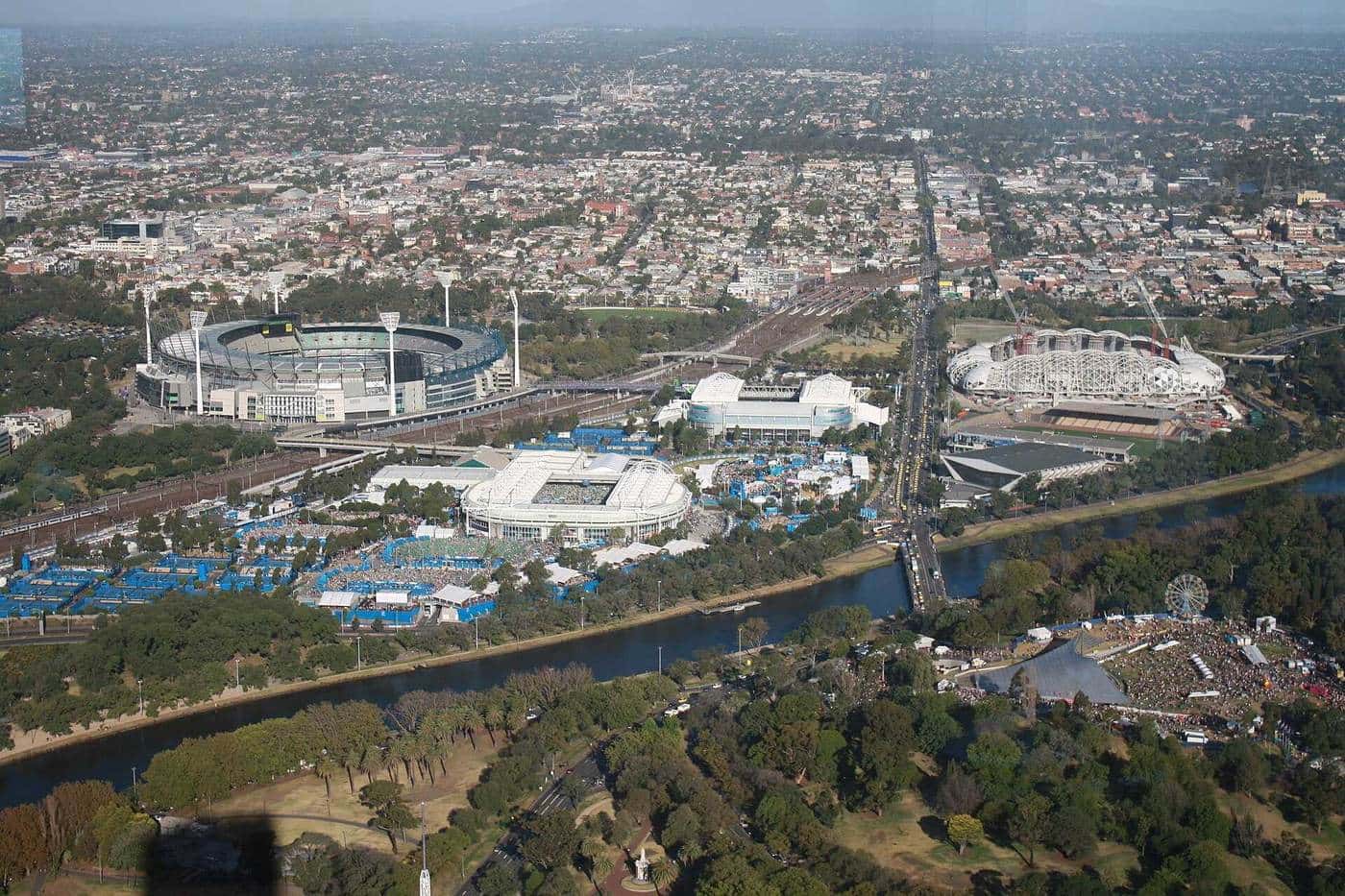
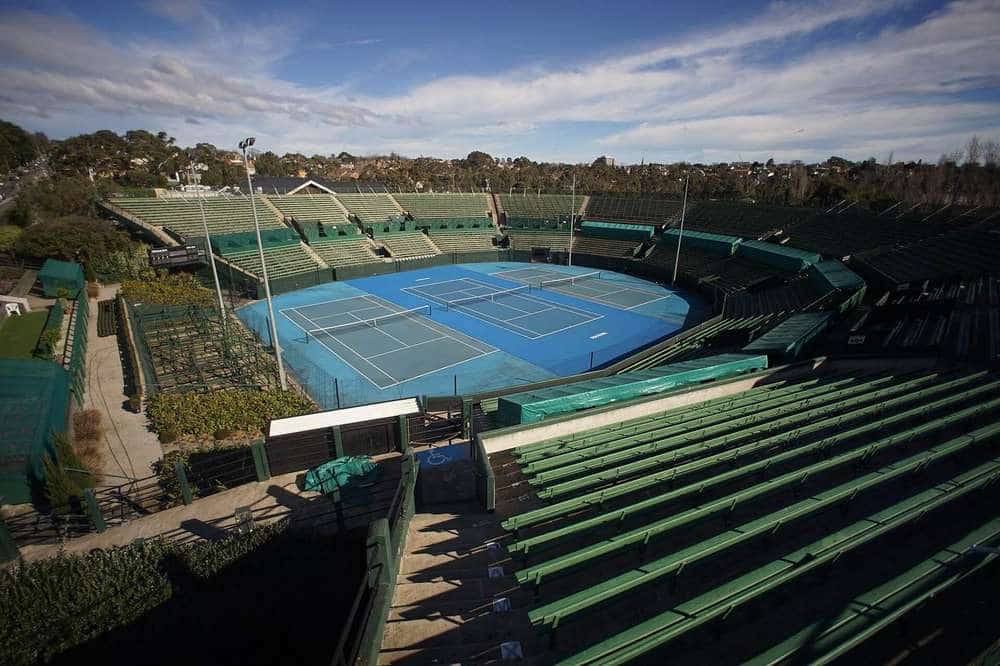
The grass-court stadium built in 1927 that hosted the Open for 16 years, and the precinct beside the Yarra with three roofed arenas. Read our venues guide.
Timeline
| Year | Milestone |
|---|---|
| 1880 | First colonial championship, Melbourne |
| 1905 | First Australasian Championships |
| 1924 | Designated a major |
| 1969 | First Open Era tournament, Brisbane |
| 1972 | Settles permanently in Melbourne at Kooyong |
| 1988 | Moves to Flinders Park and hard courts |
| 1996 | Flinders Park renamed Melbourne Park |
| 2000 | Centre court renamed Rod Laver Arena |
| 2020 | GreenSet surface introduced |
Surfaces
The Open was played on grass until 1987. It then used green Rebound Ace from 1988 to 2007, blue Plexicushion from 2008 to 2019, and blue GreenSet since 2020.
Arenas and roofs
The Australian Open was the first Grand Slam event to offer indoor play in rain or extreme heat. Its three main courts, Rod Laver Arena, John Cain Arena and Margaret Court Arena, have retractable roofs.
Trophies
The men's singles trophy is the Norman Brookes Challenge Cup, named after the pioneering champion. Read our early pioneers guide.
Australian champions at the Open
Margaret Court won the first of seven consecutive Australian singles titles in 1960. Evonne Goolagong reached seven consecutive finals and won three in a row. Rod Laver won the 1969 Open on the way to his Grand Slam. Ash Barty won in 2022.
Attendance
The move to Melbourne Park transformed attendance, which rose by about 90 per cent in 1988. Nicknamed the Happy Slam, the Australian Open is now the best-attended Grand Slam event, with more than 1.36 million people attending in 2026 including qualifying.
The struggle for star players
Until 1982, many top players skipped the Australian Open, apart from 1969 and 1971, because of the distance, dates around Christmas and New Year and low prize money. Today, it is a fixture of every top player's calendar.
Organiser
The tournament is managed by Tennis Australia, formerly the Lawn Tennis Association of Australia, which is headquartered in Melbourne.
Visiting Melbourne Park
Melbourne Park is a short walk from the Melbourne CBD and hosts concerts and events year-round. Check official websites for event information and access.
Explore further
Read about Rod Laver and Margaret Court, whose names are on Melbourne Park's arenas.
A short history in five stages
The story of the Australian Open falls into five broad stages. The first, from 1905, was the Australasian Championships, a travelling event played in different cities in Australia and twice in New Zealand. The second began when it became the Australian Championships and gained recognition as a major, though long sea journeys kept many overseas players away. The third was the Kooyong era: Kooyong had hosted the event whenever it was played in Melbourne and became the permanent venue from 1972 to 1987, the last years on grass. The fourth began in 1988 with the move to the hard courts of Flinders Park, later renamed Melbourne Park. The fifth is the modern era of retractable roofs, record crowds and a fixed mid-January date.
Our guides follow those stages. The history guide covers the tournament as a whole. The venues guide looks at Kooyong and Melbourne Park in detail. Champion profiles describe the players whose names now sit on the arenas: Rod Laver and Margaret Court.
Why the Australian Open matters
The Australian Open is now the highest-attended Grand Slam event. More than 1,360,000 people attended the 2026 tournament, including qualifying. It is also a major economic event for Victoria. For tennis history, its importance lies in how far it travelled: from a small regional championship with mostly local fields to one of the four tournaments that define a player's career. Understanding that journey helps explain why some early records need context, and why winning in Melbourne today carries the weight it does.
How we source tournament facts
Facts on these pages come from published references, including the tournament's encyclopaedic histories and venue records. Where sources disagree, we say so. Where a figure can change, such as attendance, we give the year.
Readers planning to visit Melbourne Park can use the venues guide for background before they go.
Key figures behind the venues
Two of Melbourne Park's arenas are named after Australian champions. Rod Laver Arena honours Rod Laver, who won the calendar Grand Slam in 1962 and 1969. Margaret Court Arena honours Margaret Court, who completed the Grand Slam in 1970. The third roofed stadium, John Cain Arena, is named after the Victorian Premier who suggested a retractable roof for the main court. Those names tie the modern venue directly to the history told in our guides.
A note on sources
We check each fact on this page against the references listed below, and we remove claims we cannot verify rather than guess. Records in tennis are sometimes revised as historians study old results more closely, particularly for the amateur and professional tours before 1968. If you spot an error, please use our contact page and include a source, and we will review it. This guide is general historical information. It is not affiliated with any player, club or governing body.
Guides in this section
Australian Open
History of the Australian Open
The history of the Australian Open: the 1905 Australasian Championships, travelling venues, Kooyong, the 1988 move to Melbourne Park, surfaces, roofs and records.
Read · 5 min
Australian Open
Kooyong and Melbourne Park
The two Melbourne homes of the Australian Open: Kooyong Stadium, built in 1927, and Melbourne Park, opened in 1988, with Rod Laver Arena and its roofed show courts.
Read · 5 min
Frequently asked questions
How old is the Australian Open?
The tournament began in 1905 as the Australasian Championships.
Where is the Australian Open held?
At Melbourne Park in Melbourne, its home since 1988.
When is the Australian Open held?
It typically starts in mid-January and runs for two weeks.
What surface does it use?
Hard courts, currently blue GreenSet, introduced in 2020.
What was Kooyong?
Kooyong Stadium in Toorak was the Open's permanent home from 1972 to 1987, the last years on grass.
Does this site sell Australian Open tickets?
No. Tennis History is independent and does not sell tickets. Use the official Australian Open website.
Sources and further reading
Facts on this page were checked against these primary and official sources. Conditions change — confirm before you travel or buy.
- Australian Open — Wikipedia
- Melbourne Park — Wikipedia
- Kooyong Stadium — Wikipedia
- Rod Laver Arena — Wikipedia