Two Melbourne venues tell the story of the Australian Open's coming of age. Kooyong, a leafy club stadium in the inner south-east, was the home of grass-court tennis and great Davis Cup ties. Melbourne Park, a purpose-built precinct beside the Yarra River, turned the Open into a modern, all-weather global event.
1927
Kooyong built
In Toorak, Melbourne
1972–87
Kooyong era
Permanent Open venue
1988
Melbourne Park
Hard courts, roofs
Kooyong Stadium
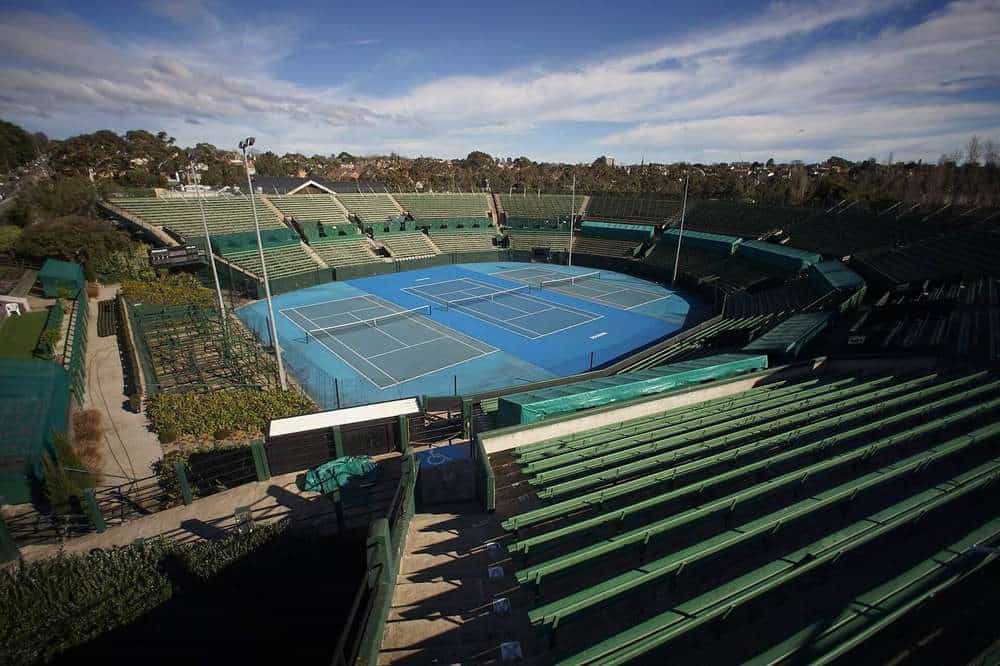
Kooyong Stadium sits within the Kooyong Lawn Tennis Club in the Melbourne suburb of Toorak, next to the suburb of Kooyong. It was built in 1927 and has been renovated several times. At its peak, it could hold up to 15,000 spectators.
Norman Brookes, Australia's first Wimbledon champion and later president of the national tennis association, was instrumental in developing Kooyong as a tennis centre. Read our early pioneers guide.
Home of the Open
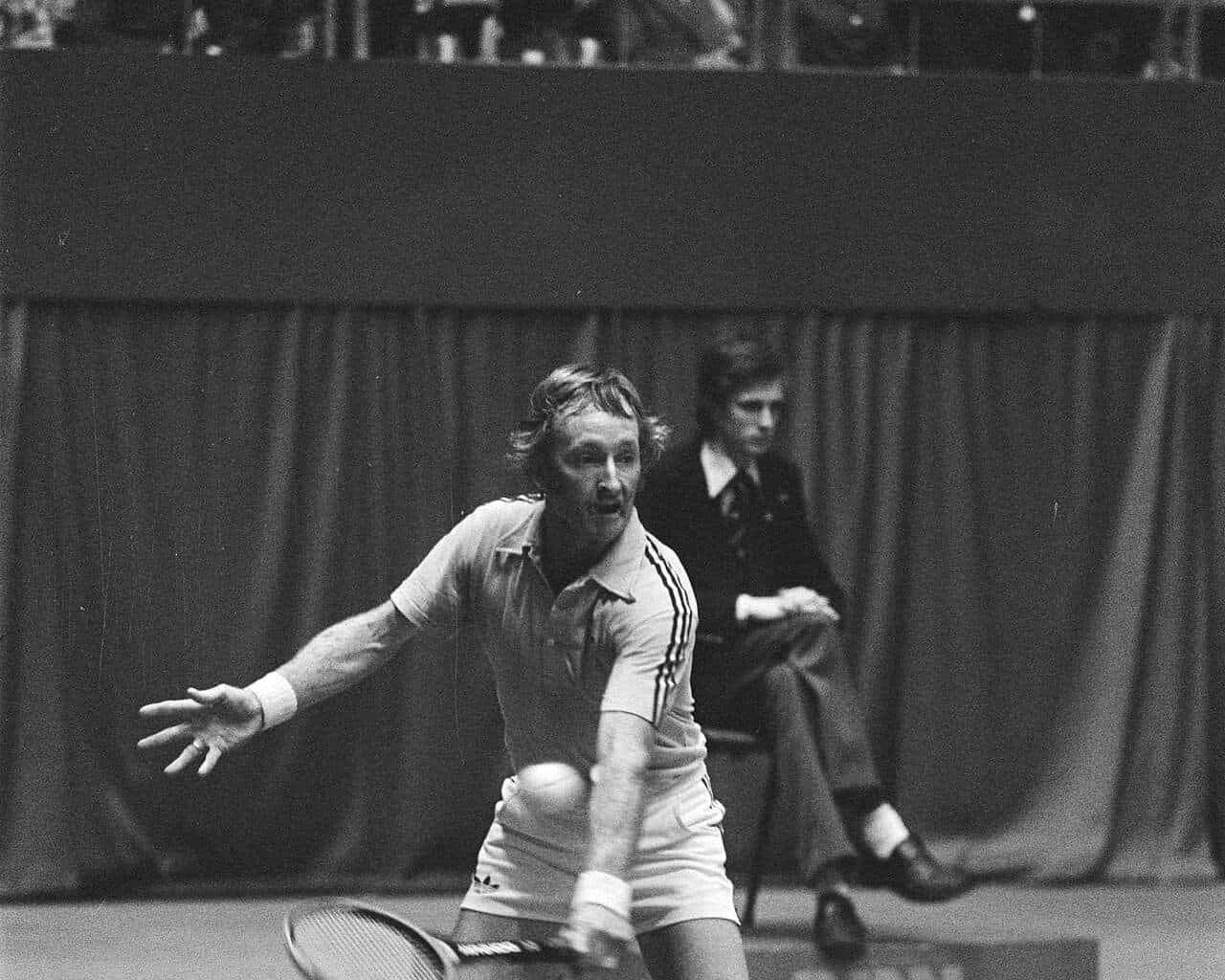
Kooyong hosted the Australian Open whenever the tournament was held in Melbourne, and became its permanent home from 1972 to 1987. It was the last Australian Open venue to use grass courts.
Davis Cup at Kooyong
Kooyong has hosted many Davis Cup ties and finals. In the 1986 final, played in late December, Australia beat two-time defending champions Sweden 3–2, with Pat Cash winning the decisive match. In March 2016, the stadium hosted a tie against the United States on a portable grass court.
Kooyong today
Kooyong now has hard courts and hosts the Kooyong Classic exhibition tournament, a traditional warm-up for the Australian Open. In 2019, the club demolished its upper western and southern stands, reducing capacity to about 5,000. The stadium has also hosted concerts, including Led Zeppelin in 1972.
Melbourne Park
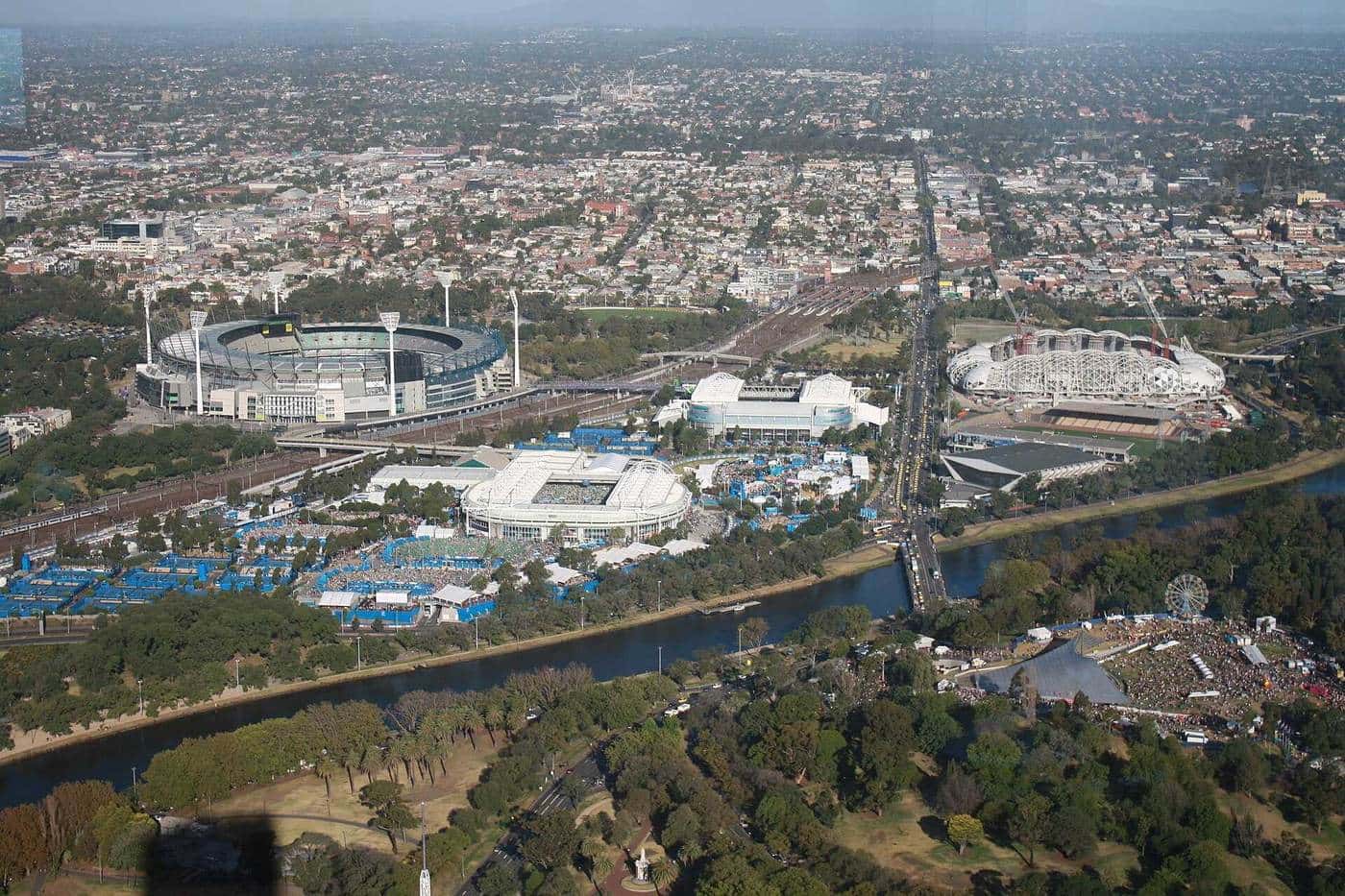
By the 1980s, the Australian Open had outgrown Kooyong. A new National Tennis Centre was built at Flinders Park, close to the city centre and the Melbourne Cricket Ground. Construction of the main arena began in 1985 and was completed in 1987. It opened on 11 January 1988 for that year's Australian Open.
In 1996, Premier Jeff Kennett renamed Flinders Park as Melbourne Park, mainly to promote the name Melbourne to international audiences. The decision was criticised at the time, but the name has become accepted.
The arenas
| Venue | Approximate capacity | Roof |
|---|---|---|
| Rod Laver Arena | 15,000 | Retractable |
| John Cain Arena | 10,500 | Retractable |
| Margaret Court Arena | 7,500 | Retractable |
| Kia Arena | 5,000 | No |
| Show Court 3 | 3,000 | No |
| 1573 Arena | 3,000 | No |
Melbourne Park has 35 outdoor GreenSet courts in total. Kia Arena opened in 2022.
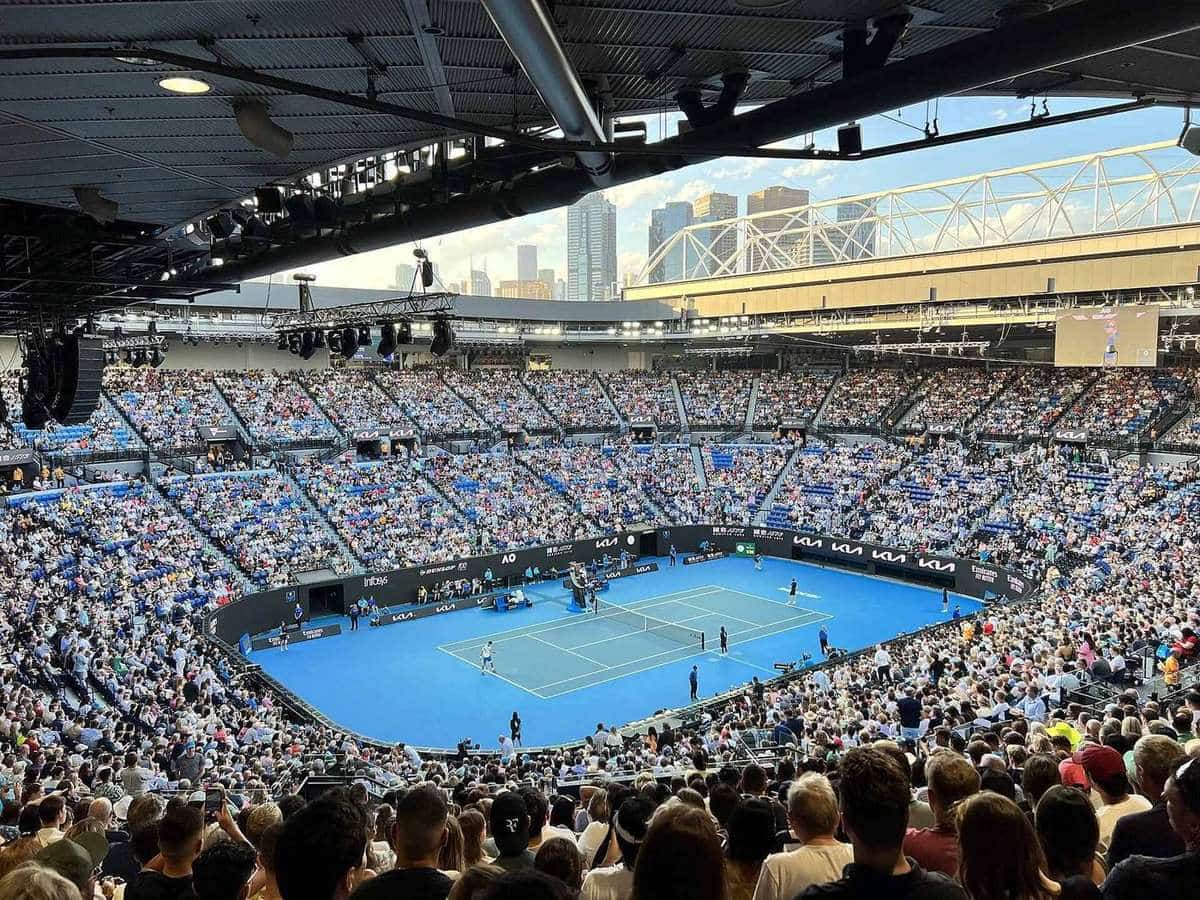
Rod Laver Arena
The main stadium was originally known as the centre court of the National Tennis Centre at Flinders Park. It was renamed Centre Court in 1996, and then Rod Laver Arena on 16 January 2000, in honour of the two-time Grand Slam winner. Read our Rod Laver guide.
Ownership
Melbourne Park is owned by the Victorian Government and managed by the Melbourne & Olympic Parks Trust, which also runs the neighbouring rectangular stadium.
From grass to hard court
The move from Kooyong to Melbourne Park changed the tournament. The switch from grass to hard courts favoured different playing styles. The roofs ended the risk of rain washing out play on the main courts and allowed matches to continue in extreme heat. Attendance rose by about 90 per cent in the first year at the new venue.
Visiting
Both venues are in Melbourne. Melbourne Park is a short walk from the city centre and hosts concerts and events year-round. Kooyong is a private club; check its website before visiting. Opening hours, tours and access change, so check official websites.
Key dates
| Year | Milestone |
|---|---|
| 1927 | Kooyong Stadium built |
| 1972 | Kooyong becomes permanent Open venue |
| 1986 | Australia wins Davis Cup final at Kooyong |
| 1988 | Open moves to Flinders Park |
| 1996 | Flinders Park renamed Melbourne Park |
| 2000 | Centre court renamed Rod Laver Arena |
| 2022 | Kia Arena opens |
Why these venues matter
Kooyong represents tennis's amateur, grass-court past, and Melbourne Park its professional, global present. Together they trace the Australian Open's journey to becoming one of the world's great sporting events.
Other historic venues
The Australian Open has also been held at venues in Sydney, Adelaide, Brisbane and Perth, including the Milton Courts in Brisbane, where the first Australian Open of the Open Era was played in 1969. Read our Australian Open history.
Kooyong beyond the Open
Kooyong Stadium was built in 1927 at the Kooyong Lawn Tennis Club, in the Melbourne suburb of Toorak. At its peak it could hold up to 15,000 people. In 2019 the club demolished the upper western and southern stands, and capacity is now about 5,000. The stadium also hosted major concerts in the 1970s and 1980s, including Led Zeppelin in 1972, the Rolling Stones in 1973 and Bob Dylan in 1986. Those events show how central the venue was to Melbourne's public life in those decades.
Kooyong was the last Australian Open venue to use grass courts. After the tournament left in 1988, the stadium courts were converted to hard courts, and Kooyong now hosts the Kooyong Classic, a summer exhibition event played before the Australian Open.
Melbourne Park in numbers
Melbourne Park is owned by the Victorian Government and managed by the Melbourne & Olympic Parks Trust. Rod Laver Arena seats 15,000, John Cain Arena 10,500 and Margaret Court Arena 7,500. All three have retractable roofs. Show Court 3 and 1573 Arena each seat about 3,000, and the 5,000-seat Kia Arena opened in 2022. There are 35 outdoor courts in total. The precinct was known as Flinders Park until 1996, when Premier Jeff Kennett renamed it Melbourne Park to promote the city's name internationally. The decision was controversial at the time but has since been accepted.
Visiting the venues
Both venues sit in Melbourne's inner east and are easy to reach by public transport. Melbourne Park is a short walk from the city centre. Outside the Australian Open, parts of the precinct host concerts, other sports and community tennis. The bronze busts of Australian Tennis Hall of Fame inductees in Garden Square are worth seeing for anyone interested in the game's history. Check official venue websites for access and event details before visiting.
The roof that changed the tournament
Rod Laver Arena cost A$94 million and opened on 11 January 1988. It was the first tennis venue in the world, and the first arena of any kind in Australia, to install a retractable roof. The idea came from Victorian Premier John Cain, whose name is now on the precinct's second arena.
A note on sources
We check each fact on this page against the references listed below, and we remove claims we cannot verify rather than guess. Records in tennis are sometimes revised as historians study old results more closely, particularly for the amateur and professional tours before 1968. If you spot an error, please use our contact page and include a source, and we will review it. This guide is general historical information. It is not affiliated with any player, club or governing body.
Frequently asked questions
When was Kooyong Stadium built?
Kooyong Stadium, at the Kooyong Lawn Tennis Club in Toorak, was built in 1927.
When was the Australian Open at Kooyong?
Kooyong hosted the Australian Open whenever it was held in Melbourne, and was its permanent venue from 1972 to 1987.
What happens at Kooyong now?
Kooyong now has hard courts and hosts the Kooyong Classic exhibition tournament. It has also hosted Davis Cup ties, including one on a portable grass court in 2016.
When did Melbourne Park open?
Melbourne Park, originally Flinders Park, has hosted the Australian Open since 1988. Its main arena opened on 11 January 1988.
Why was Flinders Park renamed?
In 1996, Premier Jeff Kennett renamed it Melbourne Park, mainly to promote the name Melbourne to international audiences.
How many seats does Rod Laver Arena have?
Rod Laver Arena seats about 15,000 for tennis.
Which courts have roofs?
Rod Laver Arena, John Cain Arena and Margaret Court Arena all have retractable roofs.
Who owns Melbourne Park?
Melbourne Park is owned by the Victorian Government and managed by the Melbourne & Olympic Parks Trust.
Sources and further reading
Facts on this page were checked against these primary and official sources. Conditions change — confirm before you travel or buy.
- Kooyong Stadium — Wikipedia
- Melbourne Park — Wikipedia
- Rod Laver Arena — Wikipedia
- Australian Open — Wikipedia