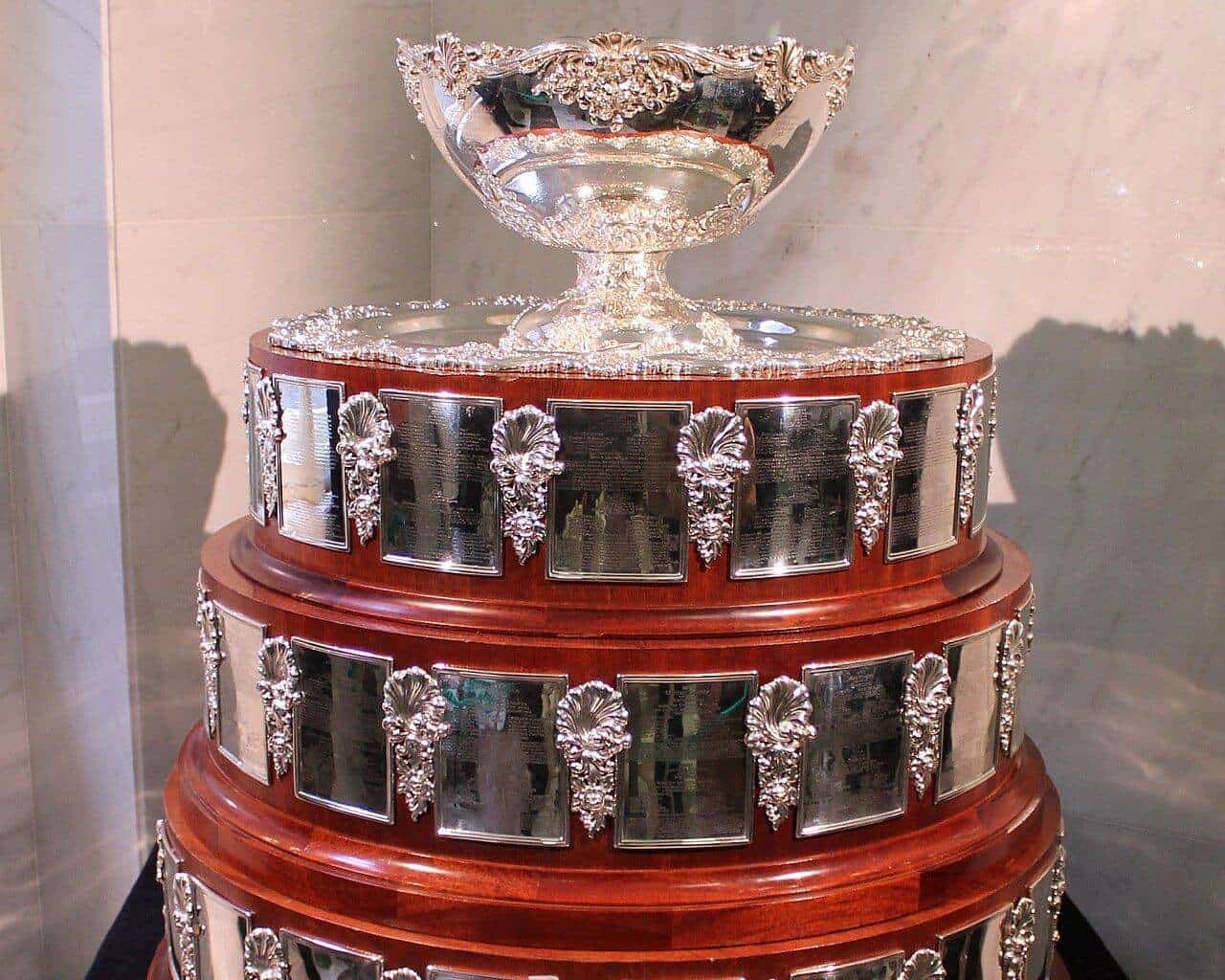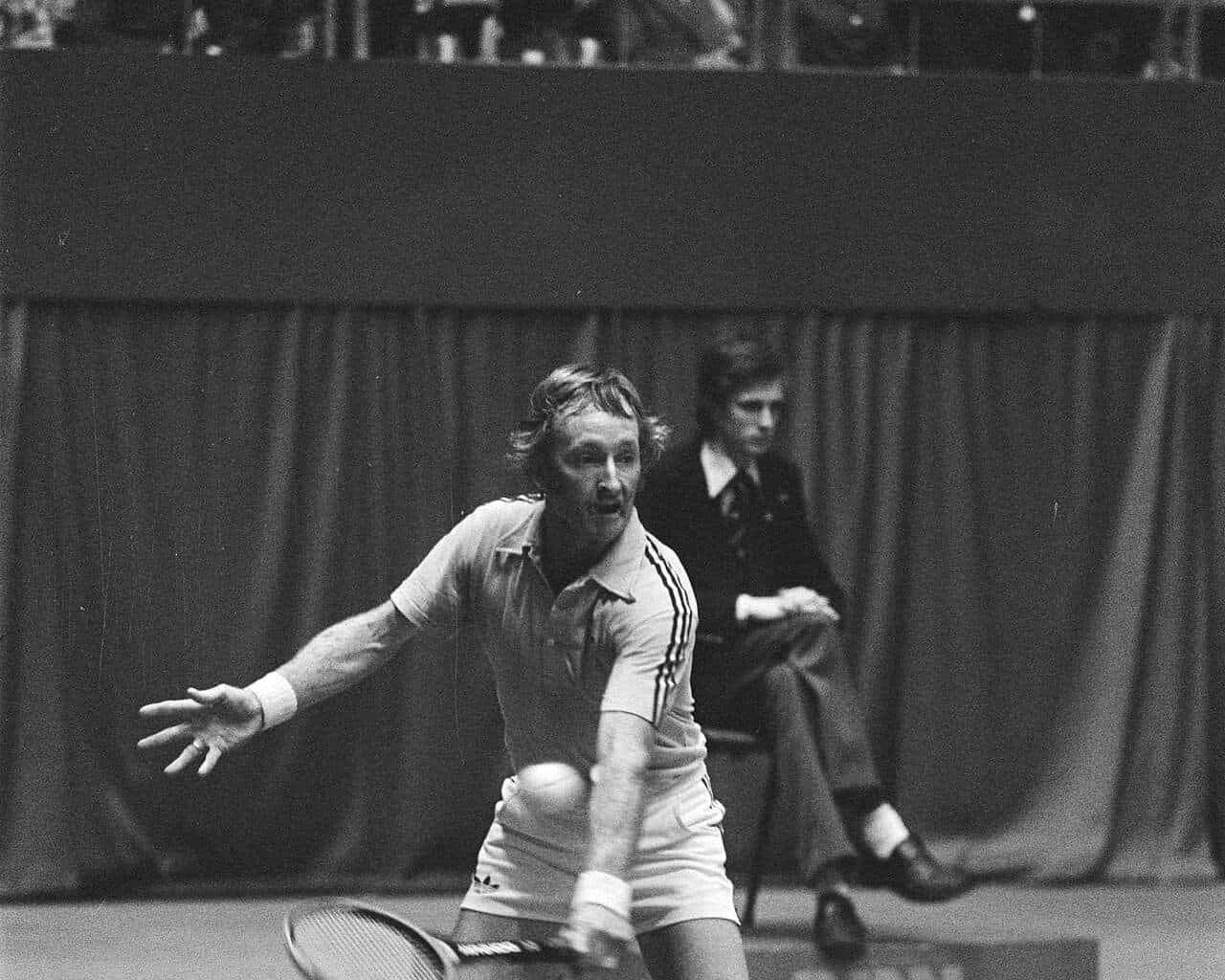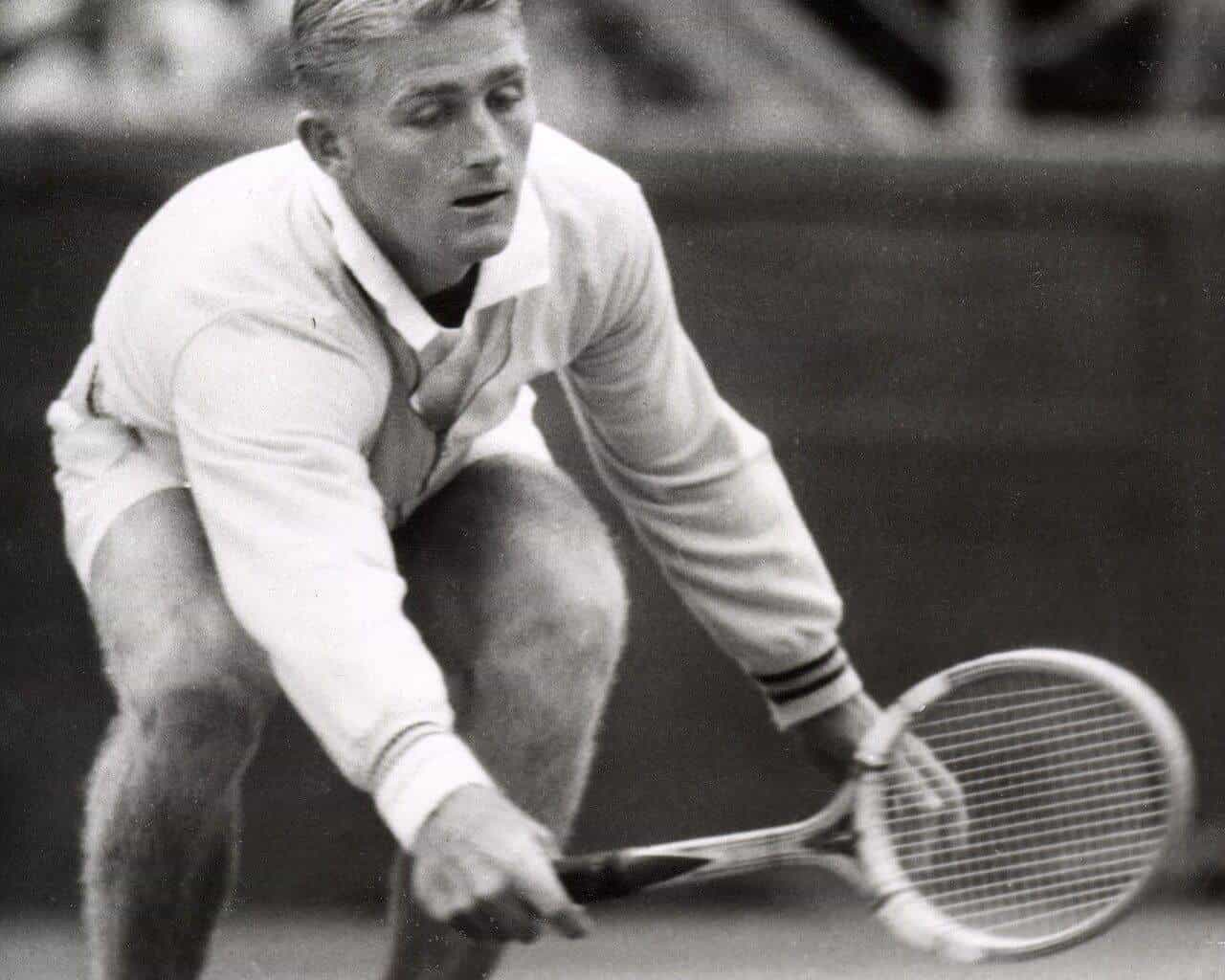
From the early 1950s, Australian men won major titles and Davis Cups with a regularity that has never been matched. A small, distant country produced a string of world-class players, many of them shaped by one man: the Davis Cup captain-coach Harry Hopman.
15
Davis Cups
Between 1950 and 1967
28
Emerson's majors
Record for a man
147
Rosewall's titles
Singles
Harry Hopman
Henry Christian Hopman was born in Glebe, Sydney, on 12 August 1906. He began playing at 13 and, playing barefoot, won an open singles tournament on a school court. A fine player himself, he became captain-coach of 22 Australian Davis Cup teams from 1939 to 1967, winning a record 16 titles.
Hopman also wrote a newspaper column, and in late 1951 he used it to raise money to keep Frank Sedgman in the amateur ranks for another year. The Hopman Cup, an international team event played in Perth, was named in his honour.
Frank Sedgman
Frank Sedgman, born in 1927, was the first star of the era. He won five major singles titles and nine major doubles titles as an amateur, and in 1951 he and Ken McGregor won the men's doubles Grand Slam. Between 1948 and 1952 he won 22 major titles across singles, doubles and mixed doubles. He was ranked world No. 1 amateur from 1950 to 1952 by several experts and led Australia to Davis Cup victories in 1950, 1951 and 1952. He emphasised fitness, with circuit running, weightlifting and sandhill running. He turned professional in 1953.
Lew Hoad and Ken Rosewall
Two Sydney teenagers, both born in 1934, became the faces of Australian tennis in the 1950s. Lew Hoad played a powerful attacking game; Ken Rosewall was famous for his backhand, though his serve was accurate rather than powerful. They were friends and rivals throughout long careers.
Hoad won four major singles titles as an amateur, the Australian and French Championships and two Wimbledons, and was part of four Davis Cup-winning teams between 1952 and 1956. In 1956, Hoad and Rosewall won all the major men's doubles titles except the French, which Rosewall missed. Hoad turned professional in 1957. Serious back problems plagued his career.
Rosewall won 147 singles titles, including eight Grand Slam tournaments and a record 15 pro majors. At the 1971 Australian Open, he became the first man in the Open Era to win a major without dropping a set. His top-level career stretched from the early 1950s to the 1970s.
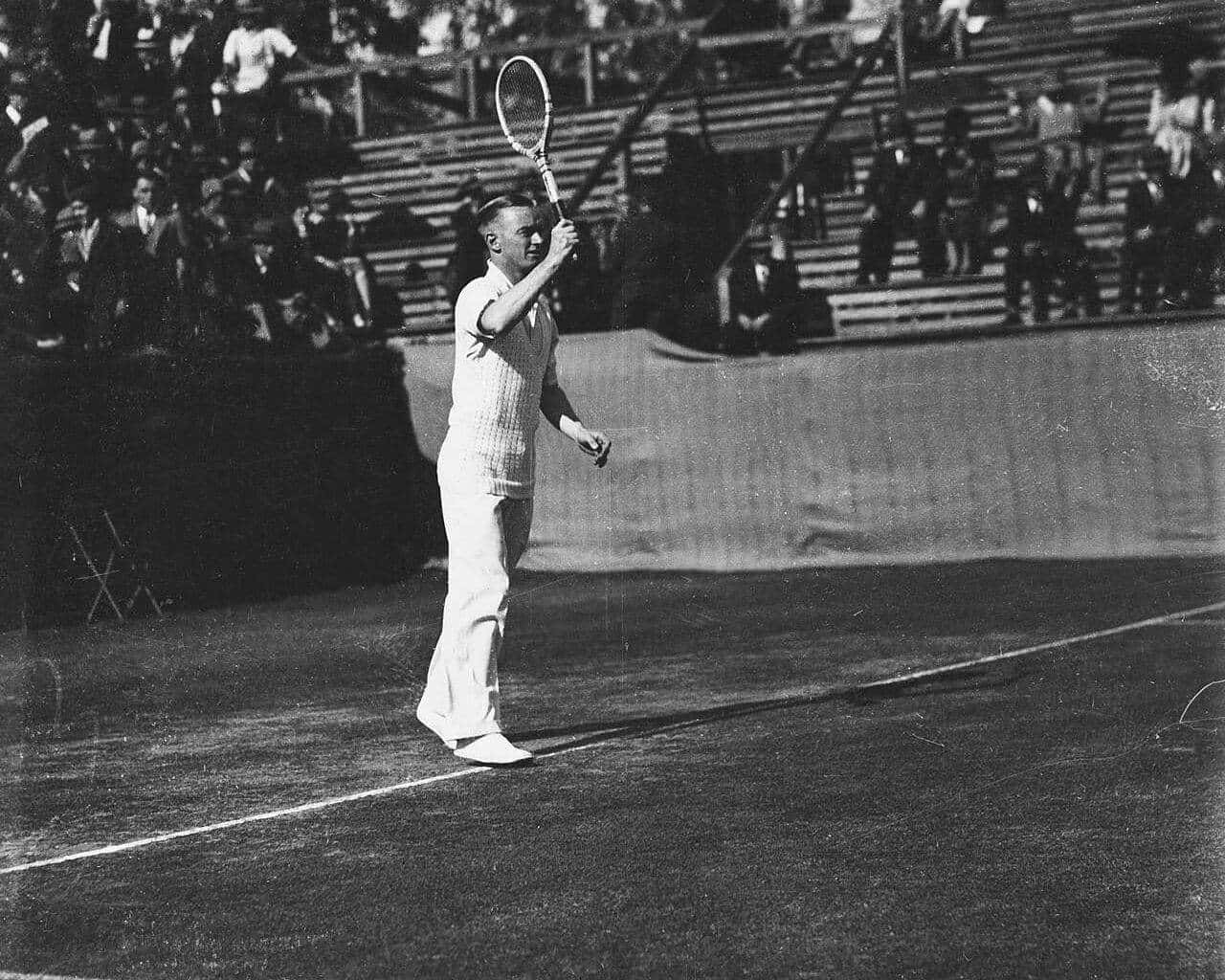
Roy Emerson
Roy Emerson was born on a farm in Blackbutt, Queensland, in 1936. He won 12 major singles titles and 16 major doubles titles, a total of 28, the all-time record for a man. All his singles majors came before the Open Era. He is the only man to complete the career Grand Slam in both singles and doubles, and he was a member of a record eight Davis Cup-winning teams between 1959 and 1967.
Rod Laver
The era's greatest star won the Grand Slam in 1962 and again in 1969. Read our Rod Laver guide.
John Newcombe and Tony Roche
John Newcombe, born in 1944, won 26 major titles, namely seven in singles, 17 in men's doubles and two in mixed doubles. His first major singles title came at Wimbledon in 1967. He was a member of five Davis Cup-winning teams.
Tony Roche, from Tarcutta in New South Wales, won the 1966 French Championships and 15 major doubles titles, 12 of them with Newcombe. He later coached Ivan Lendl, Pat Rafter, Roger Federer and Lleyton Hewitt.
Amateurs and professionals
The golden era coincided with a split in tennis. Until 1968, the majors and Davis Cup were for amateurs only. Many Australian stars, including Sedgman, Hoad, Rosewall and Laver, turned professional and disappeared from the majors for years. When the Open Era began in 1968, several returned and won again.
| Player | Major singles titles | Known for |
|---|---|---|
| Frank Sedgman | 5 | 1951 doubles Grand Slam |
| Lew Hoad | 4 | Power and charisma |
| Ken Rosewall | 8 | Backhand, longevity |
| Roy Emerson | 12 | Record 28 majors |
| Rod Laver | 11 | Two Grand Slams |
| John Newcombe | 7 | Doubles with Roche |
Why the golden era happened
Three of the four majors were played on grass in this period, Australia had its own strong network of state championships, and Hopman's teams kept winning the Davis Cup. The era left records, such as Emerson's 28 majors and Laver's two Grand Slams, that still stand.
The golden era in perspective
It is tempting to describe the golden era only through its trophies, but the conditions behind it matter too. Tennis was hugely popular in Australia after the Second World War. Grass courts were common in suburbs and country towns, and state associations ran busy junior programs. The Davis Cup gave young players a clear goal and a national stage. Promising juniors could see a direct route from local competitions to the Australian team.
The amateur rules had a major effect. Amateur players could not earn prize money, so many of the best Australians accepted professional contracts in their early twenties. That meant leaving the major tournaments and the Davis Cup. The professional tour of the 1950s and 1960s produced some of the finest tennis of the period, but it was played away from the main championships and is far less well recorded. This is why Rosewall's 15 pro majors sit alongside his eight Grand Slam titles in any full account of his career.
Further reading
Players' autobiographies and contemporary newspaper reports are the richest sources for this period. The National Library of Australia's Trove service gives free access to many digitised newspapers, which carry match reports from Kooyong, White City and Memorial Drive.
Emerson's records
Roy Emerson was the first man to win 12 major singles titles, a record that stood for 30 years until Pete Sampras passed it in 2000. He won five consecutive Australian titles from 1963 to 1967, a record that still stands, and is the only man to complete the career Grand Slam in both singles and doubles.
A note on sources
We check each fact on this page against the references listed below, and we remove claims we cannot verify rather than guess. Records in tennis are sometimes revised as historians study old results more closely, particularly for the amateur and professional tours before 1968. If you spot an error, please use our contact page and include a source, and we will review it. This guide is general historical information. It is not affiliated with any player, club or governing body.
Related guides
Explore Australia and the Davis Cup, Rod Laver and the early pioneers.
Frequently asked questions
What was the golden era of Australian tennis?
The term usually refers to the period from about 1950 to the early 1970s, when Australian men won many majors and the Davis Cup 15 times between 1950 and 1967.
Who was Harry Hopman?
Hopman (1906–1985) was Australia's Davis Cup captain-coach from 1939 to 1967, leading 22 teams and winning 16 titles. The Hopman Cup was named in his honour.
How many majors did Roy Emerson win?
Emerson won 12 major singles titles and 16 major doubles titles, 28 in all, a record for a male player.
What was Ken Rosewall known for?
His renowned backhand and his longevity. He won 147 singles titles, including 8 Grand Slam tournaments and a record 15 pro majors.
How many majors did Lew Hoad win?
Hoad won four major singles titles as an amateur, namely the Australian, French and two Wimbledons.
Who was Frank Sedgman?
A world No. 1 amateur who won five major singles titles and, with Ken McGregor, the 1951 men's doubles Grand Slam.
How many major titles did John Newcombe win?
Newcombe won 26 major titles, namely seven in singles, 17 in men's doubles and two in mixed doubles.
Why did Australian players disappear from the majors?
Many turned professional, and before 1968 professionals were barred from the majors and the Davis Cup.
Sources and further reading
Facts on this page were checked against these primary and official sources. Conditions change — confirm before you travel or buy.
- Harry Hopman — Wikipedia
- Frank Sedgman — Wikipedia
- Lew Hoad — Wikipedia
- Ken Rosewall — Wikipedia
- Roy Emerson — Wikipedia
- John Newcombe — Wikipedia