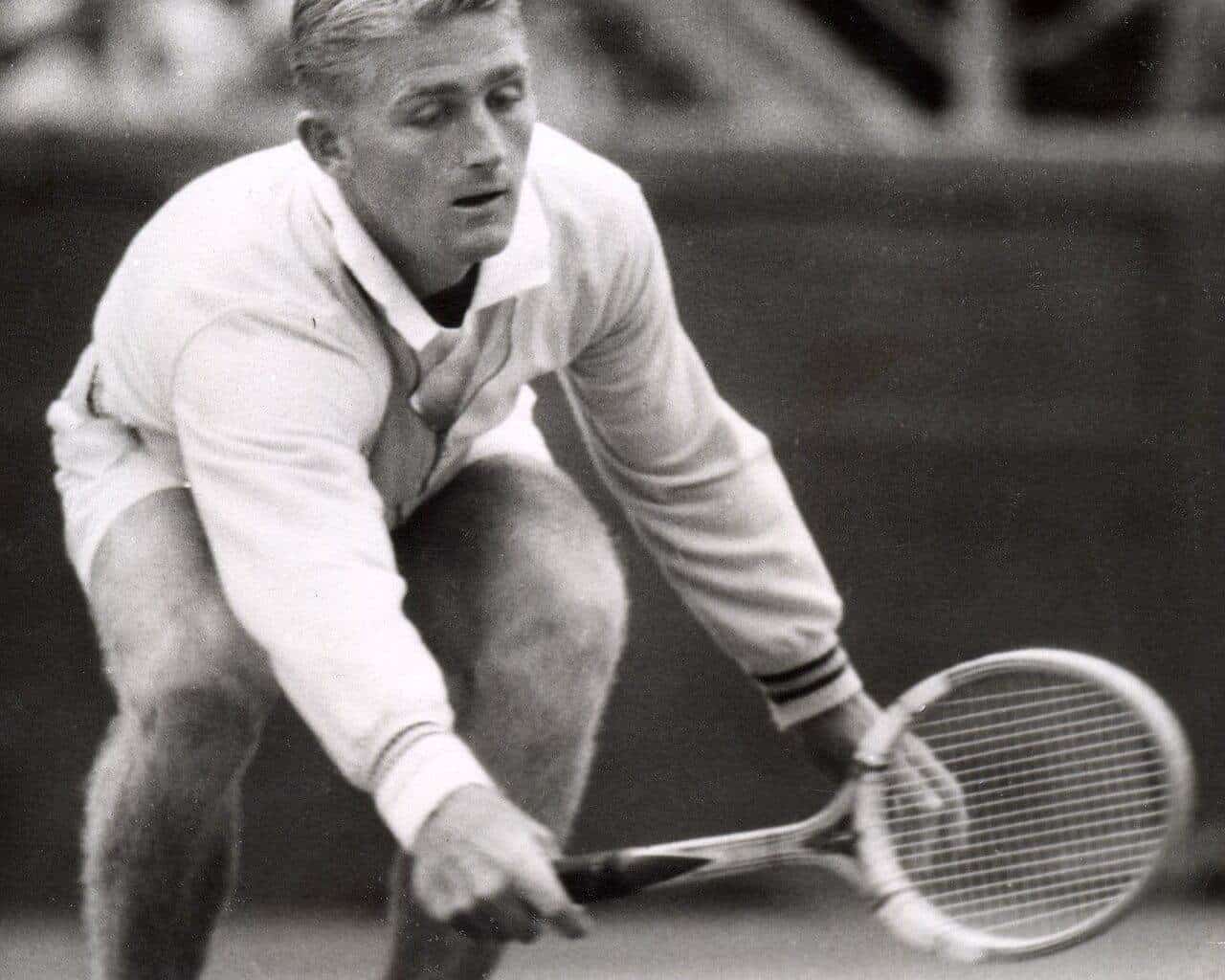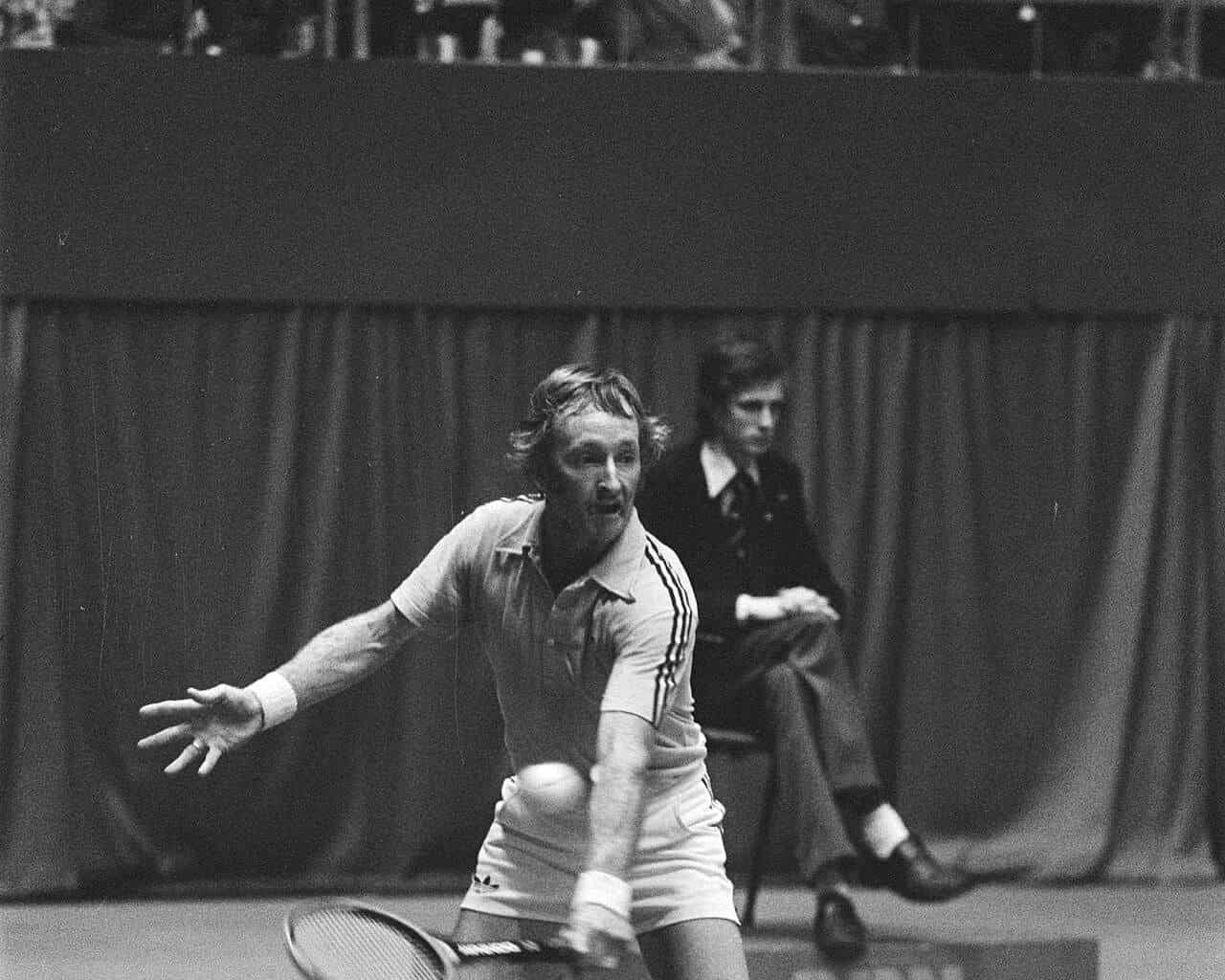
Few names in tennis carry the weight of Rod Laver. A red-haired left-hander from central Queensland, he won the Grand Slam, all four major titles in a calendar year, as an amateur in 1962. Then, after five years exiled on the professional circuit, he did it again in 1969, in the second year of open tennis. More than half a century later, no other man has won a calendar Grand Slam in the Open Era.
2
Calendar Grand Slams
1962 and 1969
11
Major singles titles
Plus 8 pro majors
200
Singles titles
Most by any player
Early life in Rockhampton
Rodney George Laver was born in Rockhampton on 9 August 1938, the third of four children of a cattleman and butcher. The family had sporting connections: the Test cricketers Frank and Jack Laver were relatives. Laver grew up playing on country courts and attended Rockhampton State High School. Small and slight, he was not an obvious champion, but he developed quick feet, strong wrists and a ferocious appetite for practice.
As a teenager, he came to the attention of coaches who saw his potential. Australian tennis in the 1950s was a finely tuned system, and promising juniors were drawn into a world of coaching, touring squads and Davis Cup ambitions led by Harry Hopman. Hopman reportedly nicknamed the young Laver "Rocket", an ironic jibe at a skinny teenager that became one of the sport's great nicknames.
The amateur years and the 1962 Grand Slam
Laver's amateur career ran from 1956 to 1962. His breakthrough came in 1959, when he reached all three finals at Wimbledon and won the mixed doubles with Darlene Hard. In 1961 he won his first Wimbledon singles title, beating Chuck McKinley in a final that lasted just 53 minutes, one of the shortest men's singles finals on record at the All England Club.
In 1962, he swept the Australian, French, Wimbledon and US Championships, becoming only the second man, after the American Don Budge in 1938, to win the Grand Slam. He was ranked the world's number one amateur in 1961 and 1962 and was part of Australian teams that dominated the Davis Cup.
Five years on the pro tour
At the end of 1962, Laver turned professional. In that era, professionals were banned from the traditional majors and the Davis Cup, which were reserved for amateurs. The pro tour was a gruelling circuit of one-night stands, travelling between cities to play head-to-head series against the best paid players, including fellow Australians Ken Rosewall and Lew Hoad.
Laver struggled at first: on an early-1963 Australasian tour, Hoad won their first eight matches and Rosewall won 11 of 13. But by the mid-1960s, he was the best professional in the world. He is ranked as the world number one professional indisputably from 1965 to 1969. In 1967, he completed the Pro Slam, winning all three professional majors in a single year.
Open tennis and the 1969 Grand Slam
In 1968, tennis went open, and professionals were welcomed back into the majors. Laver won Wimbledon that year, and between 1961 and 1970 he set a record of 31 consecutive match wins at Wimbledon that stood until Björn Borg passed it in 1980. In 1969, he won all four majors again: the Australian Open in Brisbane, the French Open in Paris, Wimbledon and the US Open. No man has repeated the feat since.
The second Slam is often regarded as the greater achievement because the fields included the best professionals as well as amateurs. Laver won on grass and clay against a deep field of champions.
Playing style
At about 173 centimetres, Laver was not tall, but he built a complete serve-and-volley game backed by aggressive groundstrokes. His left-handed serve was well disguised and wide swinging. He is the only player in history, male or female, to win titles on all the court surfaces of his era: grass, clay, hard, carpet and wood.
Davis Cup
Laver contributed to five Davis Cup titles for Australia, during a period when the competition was seen as almost as significant as the majors. Read more in our Davis Cup guide.
Legacy
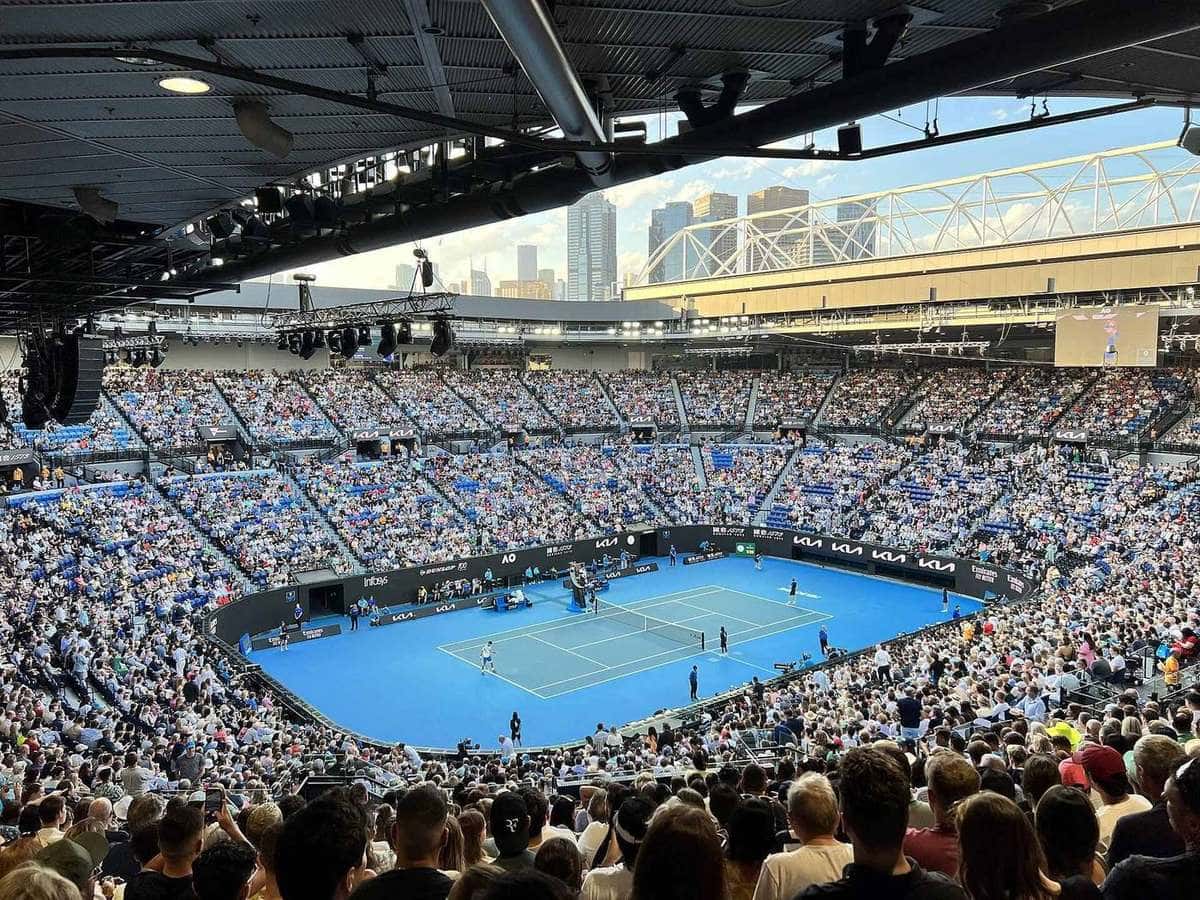
In January 2000, the main stadium at Melbourne Park, originally the centre court of the National Tennis Centre at Flinders Park, was renamed Rod Laver Arena. The Laver Cup, a team event, also bears his name. His record of 200 singles titles across amateur and professional careers is the most by any player.
Laver's career also highlights how the split between amateurs and professionals distorted tennis history. Had he been allowed to play the majors from 1963 to 1967, his total might have been far higher. Comparing players across eras is always difficult, but Laver's two Slams remain a benchmark.
Key dates
| Year | Milestone |
|---|---|
| 1938 | Born in Rockhampton, Queensland |
| 1959 | Reaches all three Wimbledon finals |
| 1961 | Wins Wimbledon |
| 1962 | Wins the amateur Grand Slam; turns professional |
| 1967 | Completes the Pro Slam |
| 1969 | Wins the Open Era Grand Slam |
| 2000 | Melbourne Park's centre court renamed Rod Laver Arena |
Rivalries
Laver's great rivals were fellow Australians. On the pro tour, Ken Rosewall, with his classic backhand, and Lew Hoad, with his power, tested him night after night. In the Open Era, he faced a new generation, including John Newcombe and Tony Roche. These rivalries were a showcase for the depth of Australian tennis.
Why Laver still matters
Laver bridged two eras: the amateur world of Hopman's Davis Cup teams and the professional, open game that emerged in 1968. His achievements under both systems make him a unique figure. For many fans, he remains the yardstick against which the greatest players are measured.
Visiting Laver's legacy
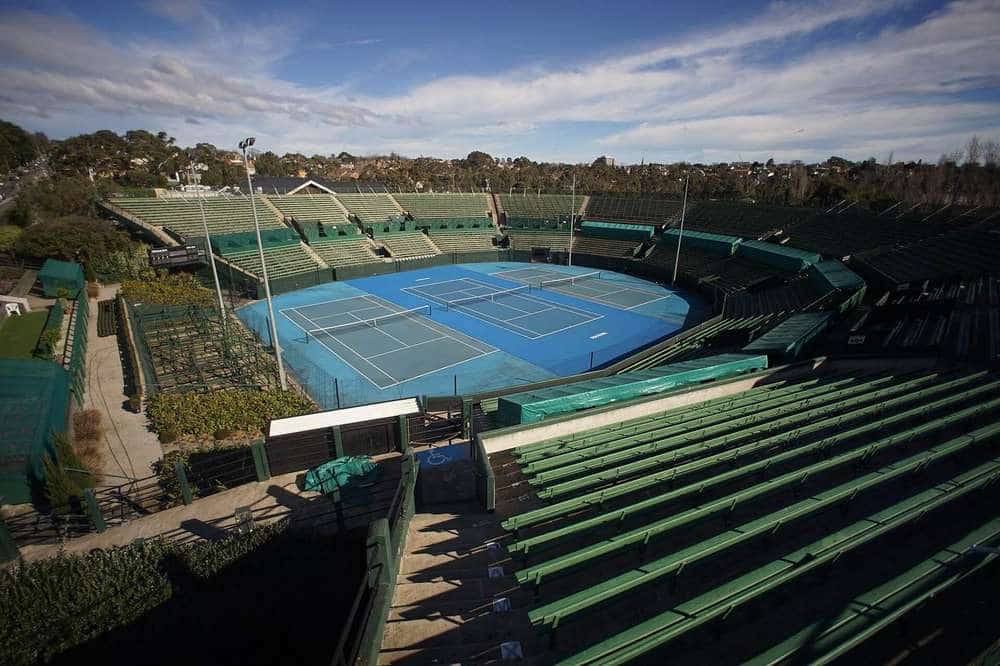
Visitors to Melbourne Park can see Rod Laver Arena from the surrounding precinct, and Australian Open visitors can watch matches on the court that bears his name. Read our guide to Kooyong and Melbourne Park.
Further reading
Match reports from 1962 and 1969 are available in digitised newspapers through the National Library of Australia's Trove service.
Rod Laver Arena
The main stadium at Melbourne Park opened on 11 January 1988 as the National Tennis Centre at Flinders Park. It was renamed Rod Laver Arena on 16 January 2000 in Laver's honour.
A note on sources
We check each fact on this page against the references listed below, and we remove claims we cannot verify rather than guess. Records in tennis are sometimes revised as historians study old results more closely, particularly for the amateur and professional tours before 1968. If you spot an error, please use our contact page and include a source, and we will review it. This guide is general historical information. It is not affiliated with any player, club or governing body.
Frequently asked questions
How many Grand Slams did Rod Laver win?
Laver won 11 major singles titles. He also won the calendar Grand Slam, all four majors in one year, twice, in 1962 and 1969.
Why is Rod Laver so highly regarded?
He is the only player to win the calendar Grand Slam twice, he won titles on every court surface of his era, and he is credited with 200 singles titles across his amateur and professional careers, the most by any player.
Where was Rod Laver born?
Laver was born in Rockhampton, Queensland, on 9 August 1938.
Why did Laver miss majors between 1963 and 1967?
He turned professional after his 1962 Grand Slam. Until the Open Era began in 1968, professionals were barred from the traditional majors, so he played the professional tour instead.
Is Rod Laver Arena named after him?
Yes. The main stadium at Melbourne Park was renamed Rod Laver Arena in January 2000.
What is the Laver Cup?
The Laver Cup is a team tennis event named in his honour, contested between teams representing Europe and the rest of the world.
Was Rod Laver left-handed?
Yes. Laver was a left-hander known for a well-disguised serve and a complete serve-and-volley game.
How many Davis Cups did Laver win?
Laver contributed to five Davis Cup titles for Australia.
Sources and further reading
Facts on this page were checked against these primary and official sources. Conditions change — confirm before you travel or buy.
- Rod Laver — Wikipedia
- Rod Laver Arena — Wikipedia
- Australia Davis Cup team — Wikipedia